

The Moon, often seen as a cold and lifeless neighbor, holds secrets that continue to intrigue scientists and stargazers alike. Its surface, marked by craters and barren plains, hints little of the mysteries beneath. But recent discoveries have revealed something extraordinary: a massive heat-emitting feature buried deep within the lunar crust.
This enigmatic finding, hidden beneath the Moon’s far side, defies expectations. It involves a rare material, typically associated with Earth, and raises fascinating questions about the Moon’s past. What could cause such heat on a body long thought to be geologically dormant? And what does this mean for our understanding of the Moon—and perhaps even other planets?
Uncovering Lunar Heat
In a groundbreaking revelation, scientists have identified a substantial heat-emitting granite mass beneath the Moon’s surface, specifically near the Compton and Belkovich craters on its far side. This discovery was made possible through data collected by both Chinese and American lunar orbiters, which utilized microwave frequency observations to detect subsurface temperatures.
Dr. Matt Siegler of the Planetary Science Institute explained, “Using an instrument looking at microwave wavelengths – longer than infrared – sent to the Moon on both the Chinese Chang’E 1 and 2 orbiters, we have been able to map temperatures below the surface. What we found was that one of these suspected volcanoes, known as Compton-Belkovich, was absolutely glowing at microwave wavelengths.”
The data revealed a silicon-rich surface feature approximately 20 kilometers wide, believed to be the caldera of an ancient volcano. This area exhibited temperatures about 10°C warmer than its surroundings. Notably, this heat is not due to current volcanic activity, as the last eruption occurred around 3.5 billion years ago. Instead, the heat emanates from radioactive elements trapped within the granite mass. Dr. Siegler noted, “We interpret this heat flux as resulting from a radiogenic-rich granite body below the caldera.”
This finding is significant because granite formation typically requires water and plate tectonics—conditions absent on the Moon. The presence of such a large granite deposit suggests that the Moon’s geological history may be more complex than previously understood. Dr. Siegler remarked, “If you don’t have water, it takes extreme situations to make granite. So, here’s this system with no water, and no plate tectonics—but you have granite.”

The discovery was detailed in a study published in the journal Nature. The research team utilized microwave frequency data to measure heat below the surface of the Compton-Belkovich volcanic complex, leading to the identification of the granite mass.
What Makes Granite Unique?
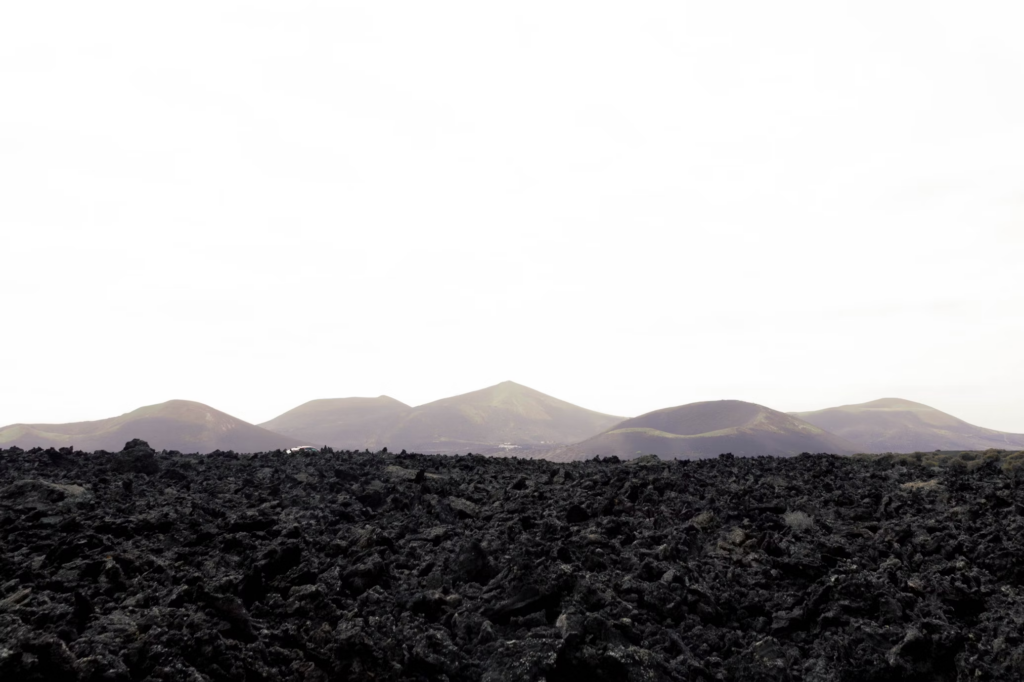
Granite is a coarse-grained igneous rock predominantly composed of quartz, feldspar, and mica. On Earth, its formation is closely linked to the presence of water and the dynamic processes of plate tectonics. These conditions facilitate the melting of the Earth’s crust, leading to the creation of large magma bodies that cool slowly beneath the surface, crystallizing into granite.
The discovery of a substantial granite mass beneath the Moon’s surface is particularly intriguing because the Moon lacks both water and active plate tectonics—key elements in granite formation on Earth. This raises compelling questions about the geological processes that could have led to the formation of granite in such an environment.
The presence of granite on the Moon suggests that alternative mechanisms may be at play. One possibility is that the Moon’s interior experienced localized heating events, potentially from radioactive decay, leading to partial melting and the formation of granite. This hypothesis is supported by the detection of heat emanating from the granite mass, attributed to radioactive elements trapped within the rock.
The Cause of the Glow

The unexpected heat emanating from the granite mass beneath the Moon’s surface is primarily due to radioactive decay within the rock. Granite is known to contain higher concentrations of radioactive elements such as uranium and thorium compared to other rocks. As these elements decay, they release heat—a process known as radiogenic heating. This phenomenon is well-documented on Earth, where the decay of radioactive isotopes contributes to the planet’s internal heat budget.
In the context of the Moon, the detection of a heat anomaly beneath the Compton-Belkovich volcanic complex suggests the presence of a radiogenic-rich granite body. Dr. Siegler explained, “We interpret this heat flux as resulting from a radiogenic-rich granite body below the caldera.”
The presence of such a heat source indicates that the Moon’s interior once contained sufficient radioactive material to sustain prolonged volcanic activity. This challenges previous assumptions about the Moon’s thermal evolution and suggests that its interior was more geologically active than previously thought.

What It Means for Future Exploration
The discovery of a substantial granite mass beneath the Moon’s surface, particularly in the Compton-Belkovich region, has great implications for future lunar exploration. This finding challenges existing theories about the Moon’s geological processes and suggests that its interior may have been more complex and dynamic than previously thought.
Granite formation typically requires specific conditions, such as the presence of water and plate tectonics—factors absent on the Moon. The presence of granite indicates that the Moon’s crust may have undergone processes leading to the differentiation and evolution of its interior, resulting in the formation of silica-rich rocks. This challenges the traditional view of the Moon as a geologically inactive body and opens new avenues for research into its thermal and magmatic history.
Understanding the Moon’s geological history is crucial for future exploration missions. Identifying areas with unique geological features, such as the granite mass beneath Compton-Belkovich, can help prioritize landing sites for robotic and human missions. These sites may offer valuable insights into the Moon’s evolution and provide access to resources that could support sustained lunar exploration.
Moreover, the detection of heat emanating from the granite mass, attributed to radioactive decay, suggests that the Moon’s interior contained sufficient radioactive elements to sustain prolonged volcanic activity. This finding aligns with the hypothesis that the Moon experienced a complex volcanic history, with localized heating events leading to the formation of diverse rock types.
A New Chapter in Lunar Exploration
This discovery of a heat-emitting granite mass beneath the Moon’s surface is not just a scientific curiosity—it’s a paradigm shift in our understanding of the Moon’s geological history. It challenges previous assumptions about the Moon’s evolution, revealing a dynamic and complex interior far removed from the barren and inert image we once had.
Beyond its scientific intrigue, this finding holds significant implications for the future of lunar exploration. It highlights the Moon as a repository of untapped mysteries and resources, offering opportunities for new missions to probe deeper into its geological secrets. By understanding these processes, we can better prioritize landing sites, refine exploration strategies, and expand our search for similar features across other rocky bodies in the solar system.
As we look to the future, this discovery reminds us that even familiar celestial neighbors can surprise us with their hidden depths. Each revelation on the Moon brings us closer to unraveling the broader mysteries of planetary formation and evolution, reinforcing why space exploration remains as vital as ever. The Moon, it seems, has much more to teach us.

