
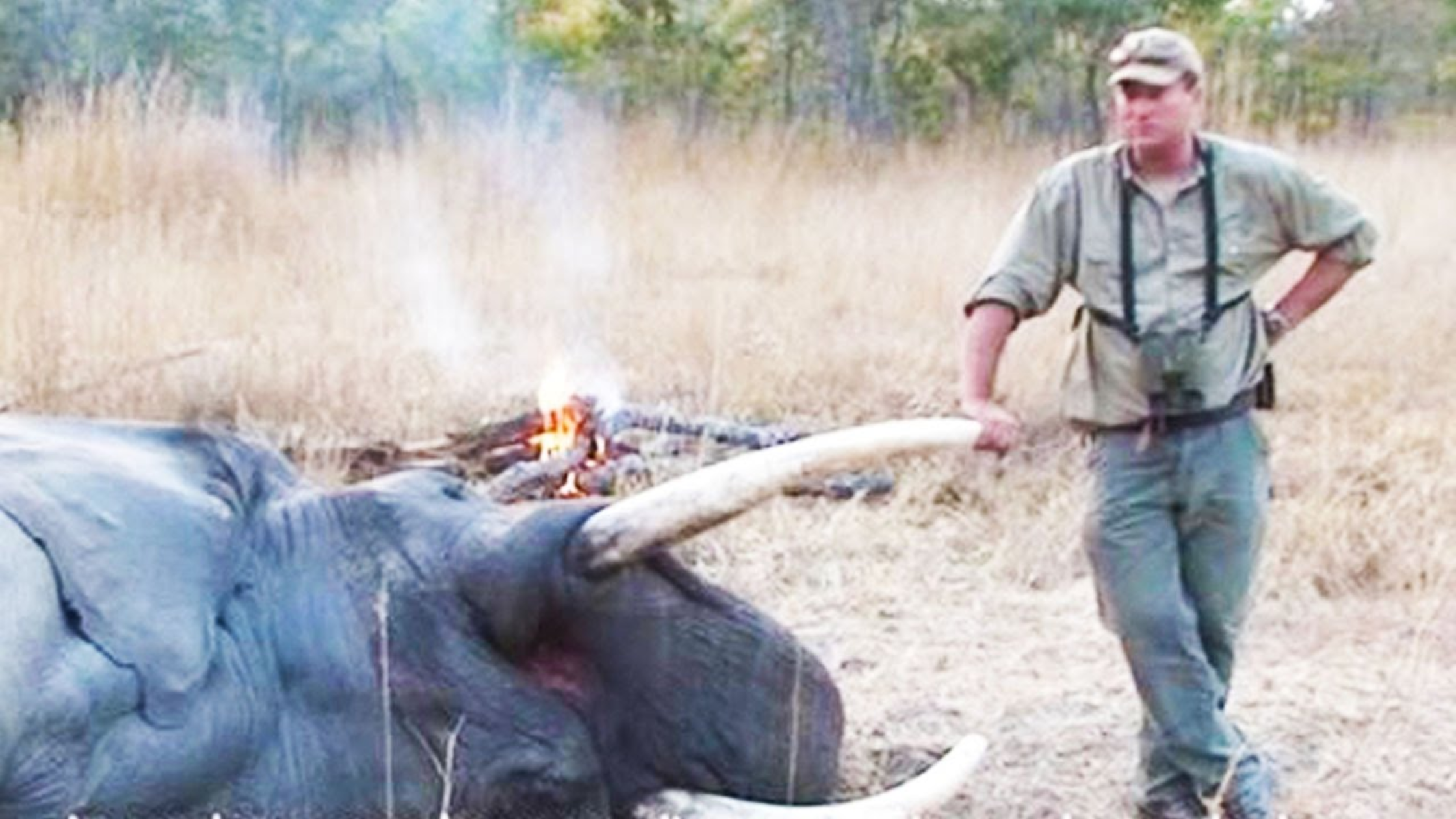
In the vast and untamed wilderness of Africa, the line between predator and prey can blur in unexpected ways. For one seasoned hunter, a routine expedition took a shocking and ironic turn when nature struck back with a force no one could have predicted. What began as a pursuit of big game ended in tragedy, leaving many to question the morality of hunting and the unpredictable power of the wild.
What happened that day serves as a stark reminder of the risks hunters face—and the lengths animals will go to defend their own. But the full story holds more than just drama; it raises deeper questions about humanity’s relationship with the natural world.
The Incident: When the Hunter Becomes the Hunted
In May 2017, Theunis Botha, a seasoned 51-year-old South African big game hunter, led a group near Zimbabwe’s Hwange National Park—a region previously spotlighted by the 2015 killing of Cecil the Lion. During this expedition, the hunters unexpectedly encountered a breeding herd of elephants, known for their protective and unpredictable nature.
As the group approached, three elephant cows charged directly at them. Botha responded by firing shots to deter the advancing animals. However, a fourth cow launched a surprise attack from the side, lifting Botha with her trunk. In an attempt to rescue him, a fellow hunter shot the elephant, resulting in her immediate collapse onto Botha, fatally crushing him.
Botha was renowned for pioneering European-style “Monteria hunts” in South Africa, utilizing packs of hounds to drive game towards hunters—a method traditionally reserved for smaller animals but adapted by Botha for larger predators like lions and leopards.
This tragic event underscores the inherent dangers of big game hunting, even for the most experienced individuals. It also highlights the unpredictable nature of wildlife, especially when animals perceive a threat to their young. Studies have shown that such encounters can lead to heightened stress responses in wildlife, potentially increasing the likelihood of aggressive defensive behaviors.

Nature’s Retaliation: A Rare Reality
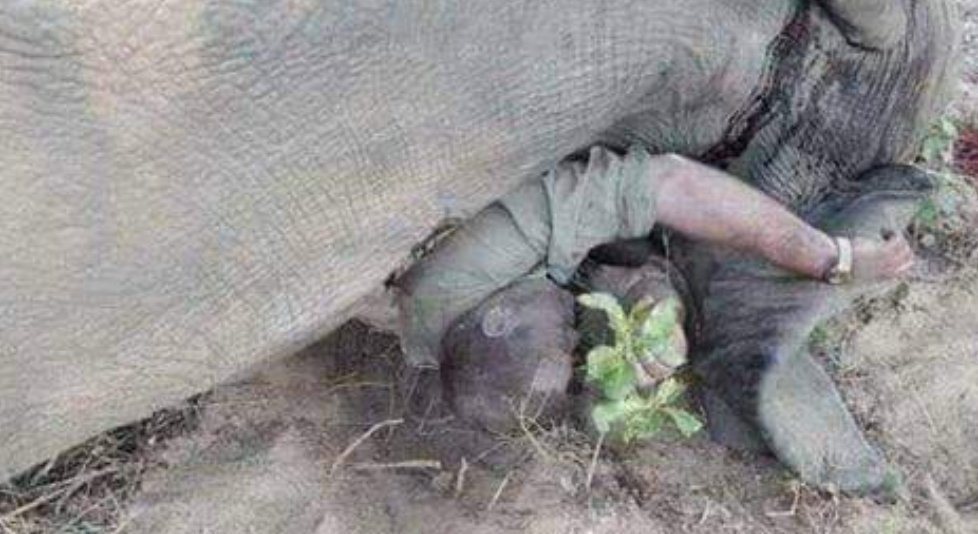
Image credits: Twitter @JimKirstin51355
The tragic demise of Theunis Botha, crushed by an elephant during a hunt, underscores the unpredictable and perilous dynamics between humans and wildlife. While such fatal encounters are uncommon, they highlight instances where animals, acting on instinct, turn the tables on their pursuers.
In a similar incident, Argentine hunter José Monzalvez was trampled to death by an elephant during a hunting expedition in Namibia. As Monzalvez prepared to shoot, the elephant charged, leading to his untimely death.
These events illustrate the inherent risks of big game hunting, where the hunter can swiftly become the hunted. Elephants, known for their intelligence and strong social bonds, exhibit protective behaviors, especially when their young are threatened. Their size and strength make any defensive action potentially lethal.
Beyond elephants, other wildlife has also retaliated against human threats. For instance, in Alaska, a hunter was attacked by a brown bear, leading to a life-threatening situation. Such encounters emphasize the unpredictability of wildlife and the potential dangers faced by those who venture into their habitats.
The Controversy of Big Game Hunting
The tragic death of Theunis Botha has reignited debates surrounding big game hunting, a practice that elicits strong opinions on both ethical and conservation fronts.
Ethical Considerations
Critics argue that trophy hunting is morally indefensible, viewing it as the killing of animals for sport rather than necessity. Organizations like PETA contend that such practices inflict unnecessary suffering on wildlife, with the pleasure derived by hunters failing to justify the harm caused. The League Against Cruel Sports echoes this sentiment, asserting that even when targeting non-endangered species, the act remains unjustifiable. They also challenge the purported economic benefits, labeling them as insufficient grounds for perpetuating inhumane activities.
Conservation Implications
Proponents of trophy hunting often claim it contributes to conservation efforts by generating revenue for wildlife preservation and local communities. However, studies challenge this narrative. Research published in One Earth indicates that the impact of recreational hunting on biodiversity and livelihoods is complex, with findings suggesting that a single characterization of its impact on conservation is necessarily simplistic.
Furthermore, evidence suggests that trophy hunting can adversely affect animal populations. Targeting the most robust individuals for trophies may lead to genetic and social disruptions within species. For instance, removing dominant males can destabilize social structures and impede reproductive success, potentially accelerating population declines.
Economic Perspectives
The economic justification for trophy hunting is also under scrutiny. Reports indicate that the financial contributions from such activities to local economies are minimal. A 2017 study by Economists at Large found that trophy hunting accounted for less than one percent of tourism revenue in eight African countries. Additionally, concerns about government corruption suggest that funds generated may not effectively support conservation initiatives.
Public Sentiment
Public reaction to Botha’s death has been polarized. While some express condolences to his family, others view the incident as a manifestation of nature’s retribution against a practice they deem unethical. This dichotomy reflects a broader societal debate over the legitimacy and consequences of big game hunting.
A Bigger Picture: The Consequences of Trophy Hunting
The tragic death of Theunis Botha has reignited discussions about the broader implications of trophy hunting on wildlife conservation, ethical considerations, and economic impacts.
Proponents of trophy hunting argue that it can contribute to conservation efforts by providing financial incentives to preserve wildlife habitats. For instance, in Namibia, regulated hunting has been associated with increases in certain wildlife populations, such as the mountain zebra, which grew from 1,000 in 1982 to 27,000 in 2014.
However, studies have shown that poorly managed trophy hunting can lead to negative ecological impacts, including altered age and sex structures within animal populations, social disruption, and even population declines. For example, selective hunting of male African lions has been linked to increased infanticide and social instability within prides.
While trophy hunting generates revenue, its economic significance is often overstated. A report by Economists at Large found that trophy hunting contributes less than 2% of overall tourism revenues in most African countries. Additionally, concerns have been raised about the equitable distribution of these funds, with limited benefits reaching local communities.
Ethical opposition to trophy hunting centers on the morality of killing animals for sport. Critics argue that it is unethical to take the life of a sentient being for recreation, regardless of any purported conservation benefits. This perspective is supported by animal welfare organizations that advocate for non-lethal conservation methods.
The debate over trophy hunting continues to evolve. In 2024, the UK proposed the Hunting Trophies (Import Prohibition) Bill, aiming to ban the import of hunting trophies. However, an Oxford-led study concluded that such a ban could cause more harm than good for the species it intends to protect, suggesting that a nuanced approach is necessary.
The Price of Trophy Hunting
The tragic death of Theunis Botha serves as a stark reminder of the unpredictability of nature and the consequences of human interference with wildlife. While some see the incident as a harsh act of nature’s justice, others view it as an unfortunate yet inevitable risk of big game hunting.
This story transcends one man’s fate; it reignites critical discussions about the ethical, ecological, and economic dimensions of trophy hunting. As wildlife populations face increasing pressures from habitat loss, poaching, and hunting, the need for more sustainable, non-lethal conservation methods grows stronger.
In a world where wildlife tourism generates far more revenue and preserves animals in their natural habitats, perhaps it’s time to reconsider humanity’s relationship with nature—not as a conqueror but as a guardian. For every action we take against wildlife, nature reminds us, in its own powerful way, that the balance is fragile, and the consequences are real.
Featured Image from Youtube @TheYoungTurks
https://www.youtube.com/@TheYoungTurks

